Chimney Cap & Crown Installation – New Britain, CT
Stop Leaks at the Source
Most chimney leaks start at the top. We install durable stainless or copper caps, rebuild cracked crowns with proper slope and drip edges, and protect masonry with breathable waterproofing—so rain, snow, and animals stay out for good.
What You Get
- Cap sizing & secure mounting
- Energy-saving top-sealing dampers
- Crown resurfacing or full re-pour
- Drip edges & expansion joints
- Siloxane water repellent
- Photo-documented results
Protecting Your Home Starts at the Top of the Chimney
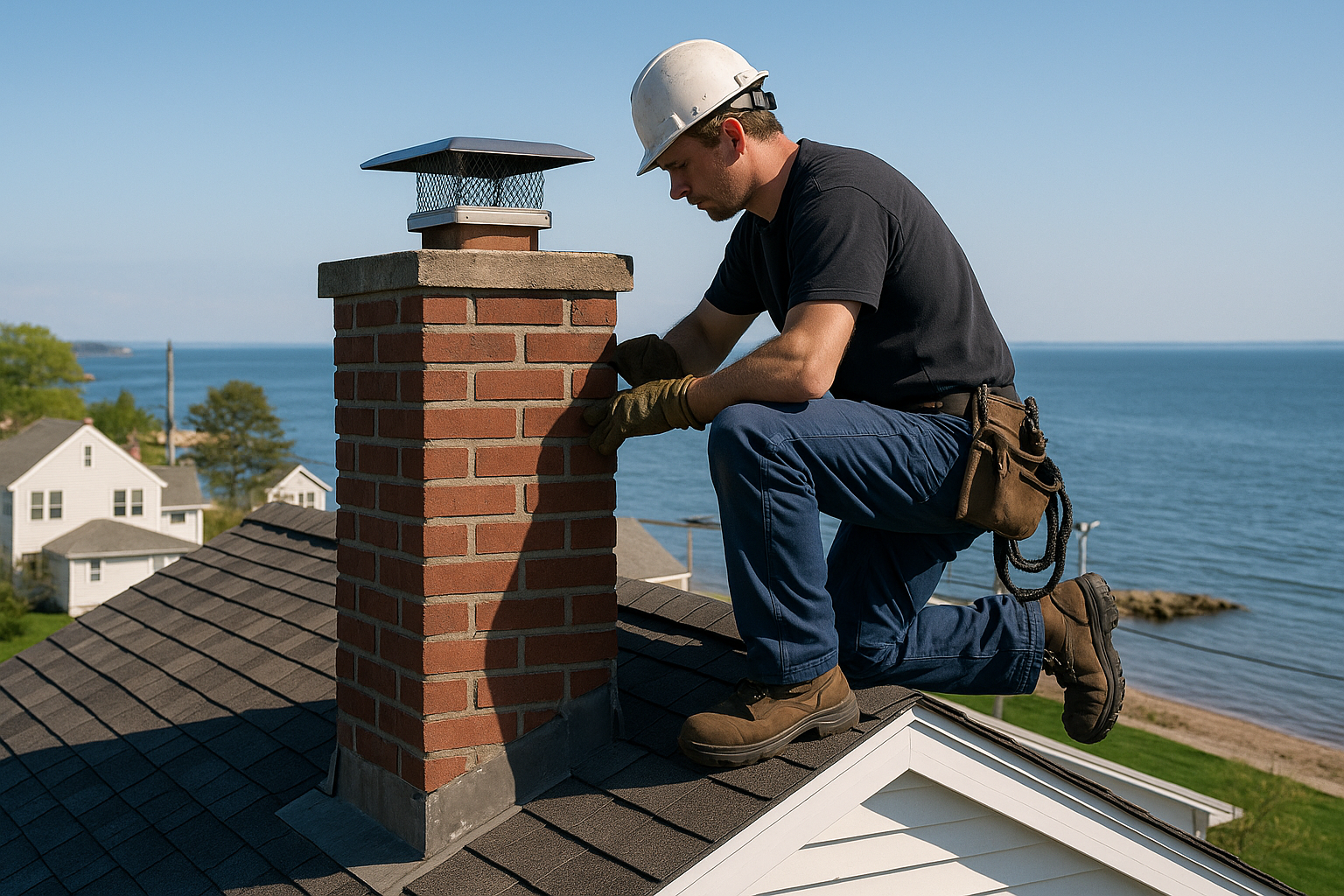
Your chimney’s first line of defense against weather and wildlife is also its most overlooked. The cap keeps water, debris, and animals out of the flue while allowing exhaust to vent. The crown— the large, sloped surface across the top of the stack—sheds water away from the flue tiles and brickwork. In New Britain, CT, rapid freeze–thaw cycles magnify small defects; a hairline crown crack can become a leak pathway in a single season, and an uncapped flue can collect gallons of water during a heavy storm. Our installations correct these weak points with durable hardware, correct geometry, and materials designed to last in New England conditions.
Chimney Caps: Small Component, Big Impact
A well-designed cap combines a hood, mesh spark arrestor, and corrosion-resistant fasteners. Without it, rain runs straight into the flue where it corrodes metal components, saturates masonry, and leaves musty odors in the living space. Animals and nesting debris then block the passage, causing smoke rollback or carbon-monoxide hazards. We size caps to your exact flue—clay tile, stainless liner, or factory-built—and anchor them so they won’t rattle or lift in gusty New Britain winds.
Cap Options
- Single-flue stainless caps (304/316)
- Multi-flue housings & chase covers
- Copper caps with patina finish
- Top-sealing damper caps (energy-saving)
- Wind-resistant terminations
Cap Benefits
- Keeps rain & snow out of flue
- Blocks animals & debris
- Reduces downdrafts & odors
- Spark-arrestor screening
- Protects liner & damper longevity
Crown Rebuilding Done Right
Many original crowns were poured too thin, finished flat, or installed without a drip edge. These mistakes allow water to pond and soak into the stack, leading to cracked tiles, rusted dampers, and interior stains. We demolish failed material to sound substrate, form the correct overhang, add reinforcement, and pour a high-performance crown mix with a smooth, sloped finish. Expansion joints are set around flue tiles to accommodate thermal movement, and we integrate the cap for a complete top-end solution.
Our Crown Process
- Demo & Prep: Remove failing crown, clean the top course, and set forms for proper slope/overhang.
- Reinforcement: Add mesh or fiber reinforcement sized to span and exposure.
- Pour & Finish: Place high-performance mix, tool expansion joints, and finish to a water-shedding surface.
- Cap Integration: Fit stainless or copper cap with spark screen; fasten using corrosion-resistant anchors.
- Weatherproofing: Treat adjacent masonry with breathable siloxane repellent.
Top-Sealing Dampers vs. Throat Dampers
Traditional throat dampers leak conditioned air up the chimney even when “closed.” A top-sealing damper mounts at the termination and seals air-tight when not in use, cutting drafts and reducing energy loss. It also helps control odors during humid weather. We evaluate appliance type, liner dimensions, and draft behavior to determine whether a top-sealing damper is a smart upgrade for your system.
Why New Britain Homes Need Strong Top-End Protection
Our area sees rain blown sideways, fast snowmelt, and overnight re-freezes. Water that gets into tiny crown fissures expands as it freezes, turning hairline cracks into fractures that channel water directly into the masonry. On windy ridgelines, screens clog with organic debris, causing pressure fluctuations and smoke odors. A robust cap paired with a properly built crown counters these forces, preventing the most common—and most expensive—chimney failures we see every spring.
Symptoms We Solve
- Brown or yellow stains above the mantle or on nearby ceilings
- Musty fireplace odors after rain or in humid weather
- Chips, flakes, or spider-cracks across the crown surface
- Birds, squirrels, or nesting debris in the flue
- Rusted damper components; water streaking on flue tiles
Waterproofing That Lets Masonry Breathe
Film-forming sealers trap moisture and often accelerate damage. We apply a penetrating siloxane water repellent that blocks liquid water at the pore structure while allowing vapor to escape. Benefits include reduced efflorescence, fewer freeze–thaw cracks, and longer service life—without altering the look of brick or stone.
Materials & Warranty
We specify 304 or 316 stainless steel for caps and fasteners (chosen for fuel type and exposure), high-performance crown blends with fiber or mesh reinforcement, and corrosion-resistant mounting hardware. Manufacturer warranties apply to many cap models, and our workmanship is backed in writing. If something isn’t right, we make it right—fast.
Quality Checklist We Follow on Every Install
- Measure flue ID/OD and termination clearances
- Confirm liner height and termination code offsets
- Select cap type for wind exposure & fuel
- Verify screen gauge and free-area for draft
- Document existing crown, cap, and flashing
- Form crown overhang & drip-edge profile
- Set expansion joint around flue tiles
- Anchor with stainless/copper hardware
- Apply siloxane repellent to upper courses
- Provide photo-rich completion report
Frequently Asked Questions
How long does a new crown last?
With correct thickness, reinforcement, slope, and drip edges—plus periodic waterproofing—a professionally built crown can last decades in Connecticut’s climate. Premature failures usually trace to thin pours, flat finishes, or lack of reinforcement.
Do I still need a cap if I rarely use the fireplace?
Yes. Even idle flues collect rain and wildlife without a cap. Moisture corrodes dampers, damages liners, and creates persistent odors—an inexpensive cap prevents all three.
Will a cap affect draft?
Correctly sized caps do not hinder draft. Many homes see better performance because caps reduce wind-driven downdrafts and keep screens clear of debris. If your draft is weak, we can evaluate flue height, liner sizing, and termination style.
Can you work in winter?
Cap installs proceed year-round. Crown work depends on temperature and moisture; when needed, we schedule pours during appropriate weather and protect fresh work from freeze/thaw.
Care Tips After Installation
- Check the cap visually after major wind events to confirm it’s seated and secure.
- Trim branches near the stack to reduce debris loading and animal access.
- Keep gutters clear so roof runoff doesn’t soak the chimney shoulders.
- Schedule annual inspections; we’ll verify crown integrity and re-seal masonry as needed.
Why New Britain Chooses Us
We’re a local team focused on clean, reliable chimney work. That means accurate sizing, neat forms and finishes, tidy job sites, and transparent pricing. We photo-document what we find and what we fix, then stand behind the work with a clear warranty. From first ladder set to final cleanup, your home is treated with care.
Need a Cap or Crown in New Britain, CT?
Stop leaks before they start. Get a top-end evaluation with photos, clear options, and upfront pricing.
Call (860) 362-9198 Request Estimate